A coverage check that shows its work.
Give it a claim (“the jewelry theft limit is $1,000”) and the policy documents. It says whether the claim is right, and shows the document, clause and page that decided it. If the documents can’t settle it, it says why instead of guessing.
Special limit on theft of jewelry · ISO HO 00 03 with endorsement HO 00 15
Claim: the special limit for theft of jewelry is $1,000.
The claim is right.
HO 00 15 controls: an endorsement overrides the form it changes (HO 00 03).
HO 00 15, page 25. $1,000 for loss by theft, misplacing or losing of jewelry, watches, furs, precious and semi-precious stones.
Special limit on theft of jewelry · ISO HO 00 03 with endorsement HO 00 15
Claim: the special limit for theft of jewelry is $1,500.
The claim is wrong.
HO 00 15 controls, and it says $1,000. The claim says $1,500.
HO 00 15, page 25. $1,000 for loss by theft, misplacing or losing of jewelry, watches, furs, precious and semi-precious stones.
Corporate reimbursement retention · Gillette D&O program, 1996 SEC filing
Claim: the primary retention under FD960228 is USD 1,000,000.
Can’t be settled from these documents.
They disagree, and no rule says which one controls. Three documents state 1,000,000 (one without a currency). Reliance’s binder states $500,000, each loss.
Reliance binder$500,000 Corporate Reimbursement, each loss
What it will not do: judge wording, answer questions about a date, read scans, or run claims in bulk.
Why it is different
Most document AI sells a better reader. You still re-read the documents to trust its answer.
ProofGraph gives an answer you can check in seconds, or a refusal with its reason.
For the person answering
The controlling document, clause and page in seconds, with a verdict or a named reason.
For the person signing off
Every answer carries its evidence. The file can be defended without re-reading it.
Three answers, and no guessing
Amounts are compared only on the same currency and basis (per loss, per claim, in total). Two rules decide which document controls, and the one used is shown: an endorsement overrides the form it changes; a later effective date overrides an earlier one.
- The claim is right. The document that controls states the same amount.
- The claim is wrong. The document that controls states a different amount. Both amounts are shown.
- This can’t be settled from these documents, with one named reason:
- documents disagree, and no rule picks one;
- amounts can’t be compared (say, per loss vs in total);
- a needed document is missing (an endorsement without its form);
- no document addresses the question.
Wording claims aren’t judged: the controlling clause is quoted with its page, marked “quoted, not checked”.
It also refuses before running:
- A scan with no readable text.
- A document neither the system nor the person checking can identify.
- A claim it can’t read as one amount or one wording claim.
- An endorsement without the form it changes: the final terms can’t be known, so it names the missing form.
Every answer can be checked
Every answer is built from quotes: document, page, exact words. Each step is marked read (off the page), derived (by code) or judgment (the model’s or a person’s call), so you know what to check first.
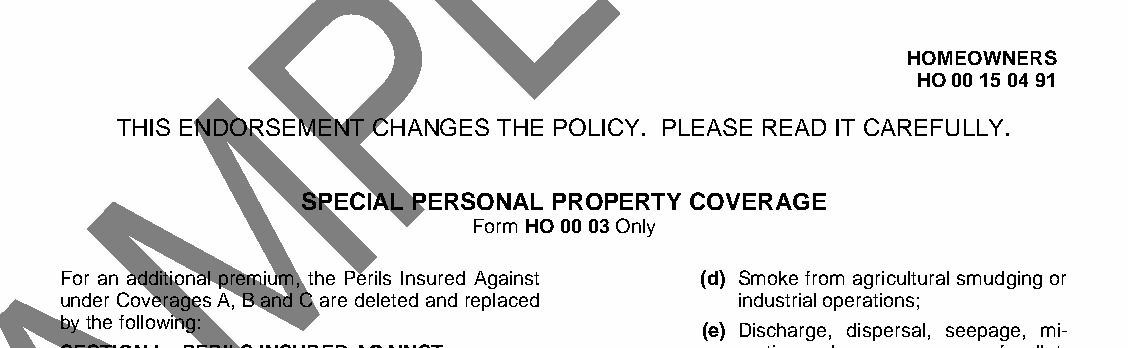
A claim and its documents
One amount, such as a special limit or a retention (what the insured pays first). The packet: every document that could control it.
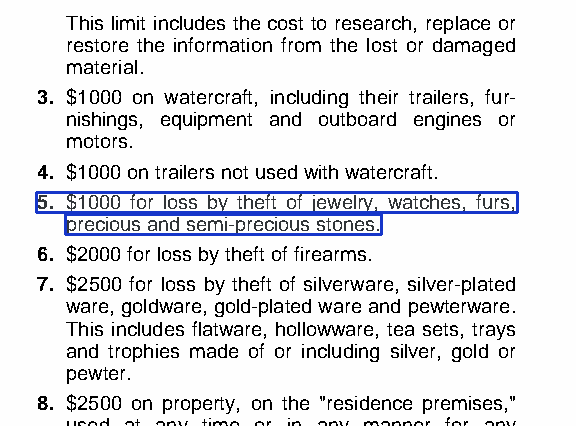
Each document is read where it applies
The model sees only documents for the claim’s policy and quotes the amount. Code checks the quote is on the page.
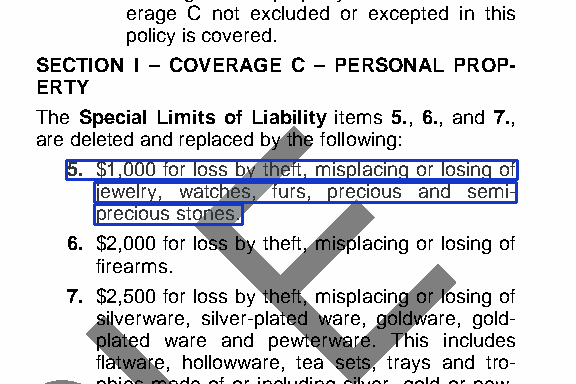
A rule decides, or it refuses
A stated rule picks the controlling document. No rule applies? It doesn’t pick. Every amount is boxed on its page.
Check a claim
Run a worked packet in seconds, or upload your own: it proposes what each document is, and you confirm before anything runs. Web app and command line today; no public API yet.
Questions
Is this another chatbot?
No. It checks one claim. The model only quotes; code compares and applies the rules.
What if an answer is wrong?
Every value is boxed on its page. A quote not found exactly on its page is rejected.
Which documents work?
Five sets so far: a 1996 D&O program (SEC filing), ISO homeowners forms, a Chubb cyber policy, US tax statutes and IRS limit notices. On the tax statutes, run as a holdout with answers written first, it got 5 of 12 right, none wrong, and refused 7 with a reason (results). On the Chubb policy it first matched 2 of 5, then 5 of 5 after fixes that followed its output, so that one is not a clean holdout (results).
Is this a coverage opinion?
No. It compares stated amounts and names the controlling document by a stated rule. Not a coverage determination, not legal advice.
Check which document controls, not the summary.
Check a claim Read the code, the design decisions and the preregistered results, including the predictions it got wrongThe third document set: 2 of 5, the fixes, then 5 of 5
A selected and accepted submission at the Meta hackathon; won Baseten and Fireworks innovation credits for development.
- Read byThe model reads only the passages it is allowed to see, and quotes the values.
- Decided byCode: amounts, comparisons, which document controls, and checking every quote against the file.
- Written by a personThe claim, and which documents belong together.
1What the model was allowed to see
Set by code before the model runs: only this policy’s documents, only the parts that apply.
| Document | Kind | Policy it describes | How we know | Passages it could see |
|---|
2The claim, checked
Two separate checks, one for and one against. The model quotes; code compares and applies the rules.
The answer
Opening the review…